
Paul successfully defended his thesis on Studies of evolved stellar populations : from giants to remnants. He will be continuing his research at UBC. Congratulations Paul!
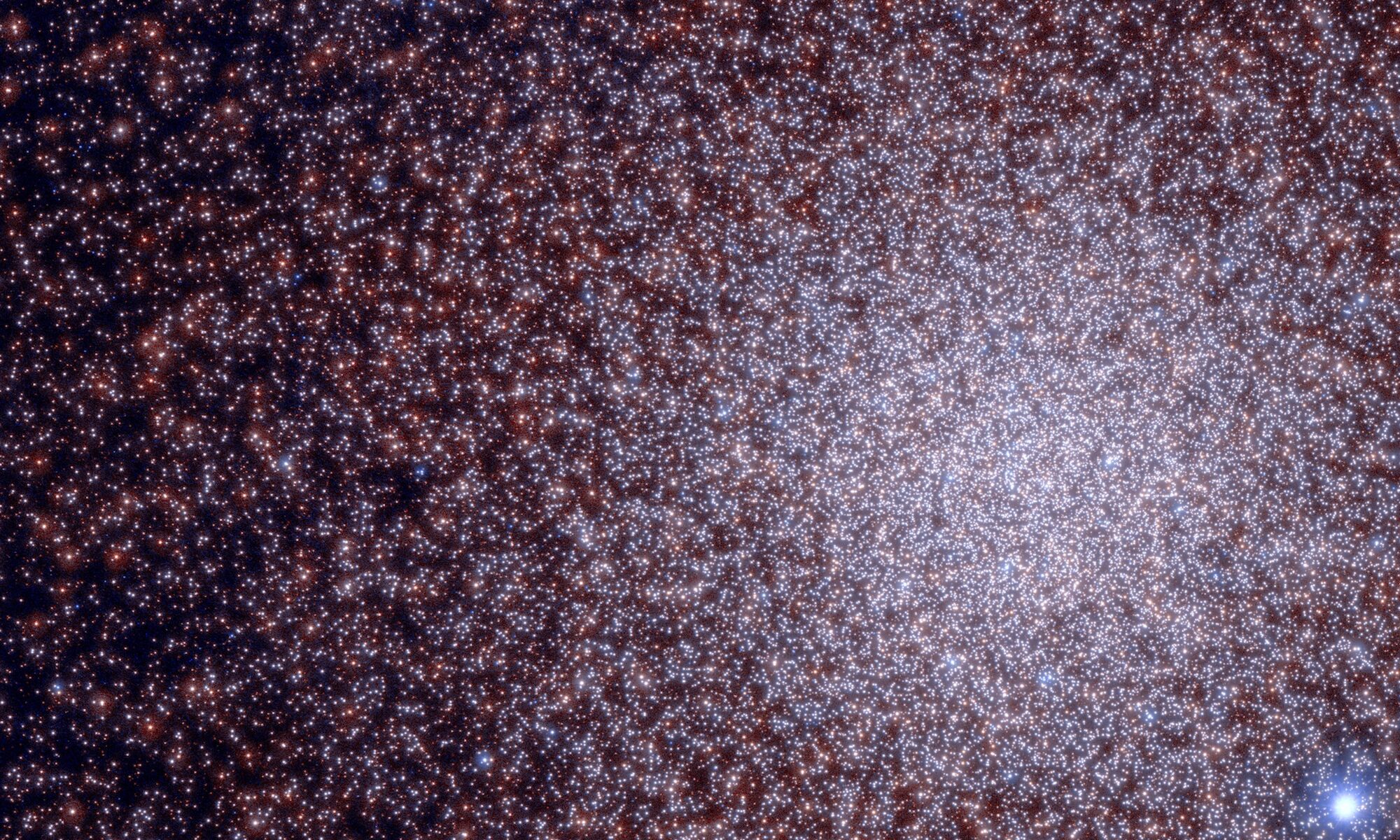
High-Energy Astrophysics at UBC
Paul successfully defended his thesis on Studies of evolved stellar populations : from giants to remnants. He will be continuing his research at UBC. Congratulations Paul!
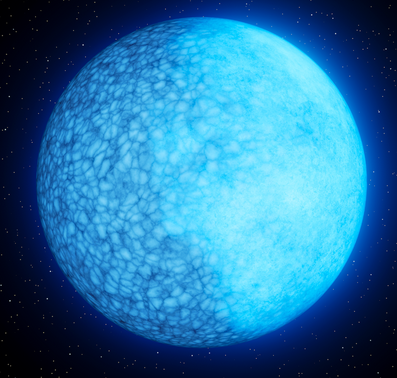
As reported in Nature (2023Natur.620…61C), the ZTF survey discovered a rapidly rotating white dwarf (ZTF J203349.8+322901.1 or Janus) that follow-up spectroscopy reveal is half-covered with helium and the other half-covered with hydrogen, a white dwarf with two faces!
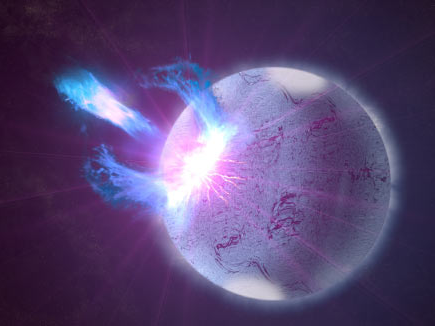
IXPE finally measures the long-predicted polarization of X-rays from the surface and magnetosphere of a magnetar (4U 0142+61) as published in Science, 2022Sci…378..646T. The extent of polarization from 2-4 keV is about ten percent indicating the surface is likely to be solid or liquid. Above 4 keV, the mode of polarization switches and increases to about 30% as expected from resonant Compton scattering in the magnetosphere. This is an amazing validation and probe of the magnetar model!

Javiera defended her thesis on Red giant stars as standard candles. Congratulations Javiera!
Our JWST proposal (on ADS) to look for brown dwarfs and planetary disks was chosen for Cycle 1! Learn about our motivation for the proposal arxiv:1702.00091 and arxiv:1903.06769.
Our second paper on carbon stars as standard candles has just been accepted 10.1093/mnras/staa3750. Check it out!
Here is the first paper too 10.1093/mnras/staa1346.
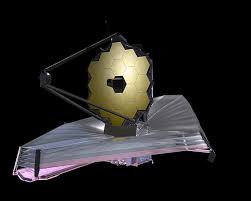
Our group led on four JWST proposals and contributed to another two to study objects from the size of Jupiter to entire galaxies, from a few kiloparsecs to nearly 100 Megaparsecs. We were working right up to the deadline!
We have just published two new papers on the X-ray polarisation from accreting X-ray pulsars: 10.1093/mnras/staa3428 and 10.1093/mnras/staa3429. These are the first new models in nearly forty years!
About ten to twenty percent of white dwarfs are strongly magnetized, and the origin of the magnetic field is a mystery. We have taken a big step toward solving this mystery with the discovery that more than half of stars with initial masses between five and seven times that of the Sun form magnetic white dwarfs through single-star evolution. This is the first evidence that neither mergers or mass transfer are needed to build the strong fields on white dwarfs. Check out our ApJ paper 10.3847/2041-8213/abb5f7!
Denis has been chosen for a CITA National Fellowship to work at UBC from 2020 to 2022. Congratulations Denis!