Can some of the oldest stars in our Galaxy help reveal the nature of dark matter?
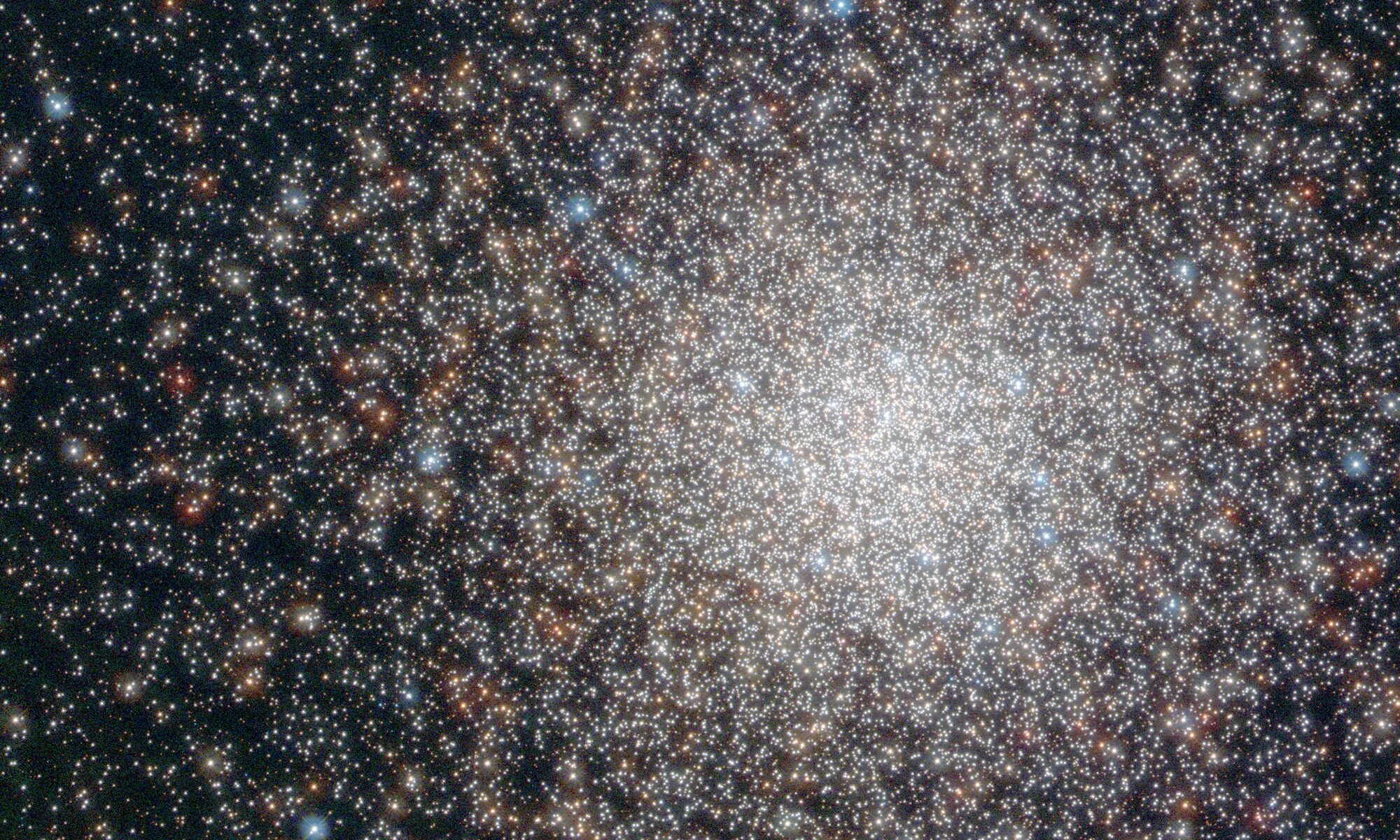
In a new study, Axion Constraints from White Dwarf Cooling in 47 Tucanae, we used observations of white dwarfs in the globular cluster 47 Tucanae to search for evidence of axions, hypothetical particles that are among the leading candidates for dark matter. White dwarfs cool gradually over billions of years, and if axions exist and interact with electrons, they would provide an additional pathway for energy loss, causing the stars to cool more rapidly.
To test this possibility, we combined detailed white dwarf cooling models with high-quality observations from the Hubble Space Telescope. By comparing theory and observation, we searched for signs of excess cooling that could be attributed to axion emission.
The result was clear: the observations are best explained without any detectable axion cooling. As a result, we derived one of the strongest limits yet on the interaction between axions and electrons, improving upon previous constraints from white dwarf studies and placing significant pressure on earlier hints of axion-induced cooling.
This work demonstrates how ancient stellar remnants can serve as laboratories for fundamental physics. Even when we do not discover new particles, observations of white dwarfs help narrow the possibilities and guide future searches for dark matter and other physics beyond the Standard Model.
Reference: Fleury, Obertas, Richer & Heyl 2026, JCAP, 10, 045.
DOI: https://doi.org/10.1088/1475-7516/2026/10/045
arXiv: https://arxiv.org/abs/2511.21676